 By Alexis Grace
Traditional American residential yards often maintain a strict divide between the ornamental front lawn and the hidden backyard vegetable patch. This separation forces homeowners to maintain two entirely different zones, which doubles the workload and hides valuable food production behind fences or garage walls. Edible landscaping shatters this outdated model by blending fruit trees, berry bushes, herbs, and vegetables directly into standard flower beds and foundation plantings.
Integrating food plants into your everyday ornamental landscape transforms a utilitarian chore into an artistic pursuit. Instead of choosing between curb appeal and a home harvest, you create a multifunctional ecosystem that feeds both the soul and the kitchen table. Embracing this design philosophy allows you to maximize limited yard space, improve household food security, and enjoy a vibrant landscape that changes deliciously through the seasons.
1. Design with Foliage Color and Texture in Mind
When most people picture a vegetable garden, they imagine dull rows of brown dirt punctuated by green plants. Edible landscaping flips this concept on its head by treating food crops like high-end ornamental foliage. Plants that taste wonderful often possess striking visual characteristics that rival traditional decorative annuals and perennials.
To build visually stunning beds, select edible varieties based on their color, shape, and growth habit:
-
Deep Burgundy and Purple Tones: Varieties like Redbor kale, purple podded peas, and Ruby Red Swiss chard offer rich, moody hues that contrast sharply with golden or lime-green annuals.
-
Fine Textures and Feathery Leaves: Globe artichokes feature massive, architectural silvery-green leaves that command attention like a tropical accent plant, while fennel brings a delicate, cloud-like texture to garden borders.
-
Variegated Patterns: Variegated sage and tricolor winter savory inject splashes of cream, green, and purple into low-growing borders, serving as effective living mulch along walkways.
Pairing these edible stars with flowering perennials creates a seamless visual transition. When visitors walk through your yard, they will notice the rich tapestry of colors and textures long before they realize the garden is entirely edible.
2. Leverage Vertical Space with Climbing Crops
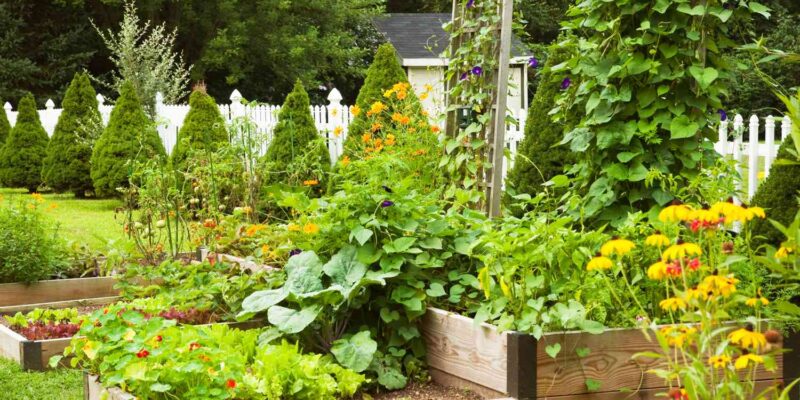
Maximizing yield in a mixed landscape requires looking upward. Traditional vegetable patches sprawl across horizontal ground, but climbing vines and indeterminate plants allow you to push your food production into the vertical dimension. This technique creates natural focal points and architectural height while keeping fruit clean and away from ground-dwelling pests.
Sturdy trellises, arbors, and obelisks covered in edible vines serve the exact same design function as traditional garden structures, but with a much higher reward. Train sugar snap peas or pole beans up a wooden archway at the entrance of your patio to create a living green tunnel that yields crisp pods all spring. Plant indeterminate cherry tomatoes near a sunny wall, staking them securely to create a lush, red-fruited pillar of foliage.
Raspberries and thornless blackberries can be espaliered against a fence line, transforming a plain wooden barrier into a productive green tapestry. Utilizing vertical surfaces saves valuable ground area for low-growing root crops and herbs, ensuring every square foot of your landscaped beds works double duty.
3. Choose Perennial Edibles for Long-Term Structure
Traditional vegetable gardens demand a complete reset every single spring, requiring hours of tilling, planting, and seed starting. Edible landscaping relies heavily on perennial food crops that return year after year, establishing a permanent backbone for your garden design much like traditional shrubs and ornamental grasses.
Incorporating long-lived plants into your beds reduces seasonal labor while providing reliable structure:
-
Artichokes and Cardoons: These architectural giants act as focal points at the back of garden beds, surviving mild winters to return with massive, dramatic foliage.
-
Rhubarb: Featuring enormous, heart-shaped leaves and bright ruby stems, rhubarb makes a phenomenal anchor plant for damp, shady corners of the yard.
-
Perennial Herbs: Rosemary, lavender, and oregano form dense, woody sub-shrubs that provide evergreen structure, drought tolerance, and fragrant borders along pathways.
-
Berry Shrubs: Highbush blueberries offer delicate spring bell flowers, sweet summer fruit, and brilliant fiery-red autumn foliage, checking every single box required of a premium ornamental shrub.
Using perennials anchors your landscape design against seasonal shifts, ensuring the yard maintains a sense of maturity and substance even during the dead of winter.
4. Integrate Fruit Trees as Specimen Plants
Every traditional landscape features a few specimen trees meant to catch the eye and provide scale to the property. By replacing sterile ornamental pear trees or non-fruiting crabapples with actual fruit-bearing varieties, you gain stunning spring blossoms, shade during hot summer afternoons, and a bountiful autumn harvest.
Dwarf and semi-dwarf fruit trees fit seamlessly into residential yards without overwhelming the space or casting excessive shadow on neighboring plants. Apple, peach, pear, and fig trees can be pruned into neat, manageable shapes or trained flat against sunny brick walls using espalier techniques.
When spring arrives, your yard will erupt in clouds of pink and white blossoms that rival any flowering cherry tree. As the season progresses, branches heavy with developing fruit add a sculptural element that changes week by week. Planting fruit trees strategically also creates natural microclimates, offering partial shade to tender salad greens planted underneath their canopy.
5. Plant Dense Polycultures to Crowd Out Weeds
Traditional gardens keep plants isolated in neat, lonely rows, leaving massive expanses of bare earth exposed to baking sunlight and aggressive weeds. Edible landscaping adopts the principles of companion planting and high-density polycultures, mimicking natural ecosystems where plants grow closely together to support one another.
Interplanting fast-growing greens like leaf lettuce and spinach beneath the sprawling leaves of squash or zucchini creates a living mulch layer. The larger leaves shade the soil, keeping the earth cool and retaining precious moisture, while the smaller greens fill every available gap to prevent weed seeds from germinating.
This dense planting strategy eliminates the need for ugly synthetic mulches in your display beds. Instead, a rich carpet of overlapping edible leaves covers the ground, creating a lush, abundant aesthetic that looks like an untamed English cottage garden while producing maximum food yields from a minimal footprint.
Frequently Asked Questions
Will growing vegetables in my front yard attract unwanted pests and wildlife?
Any garden containing food can attract wildlife, but you can minimize issues by choosing resilient varieties, installing subtle fencing around vulnerable crops, and harvesting produce promptly when ripe. Planting strong aromatic herbs like rosemary and mint near the borders can also help deter certain insects naturally.
How do I deal with soil safety when planting food near a foundation or driveway?
If you have concerns about lead or chemical runoff near older home foundations or paved areas, construct raised garden beds or use large decorative containers. This approach guarantees clean, uncontaminated soil for your root crops and leafy greens while keeping the design looking intentional and neat.
Can I mix edible plants into existing perennial flower beds without digging everything up?
You can easily slip smaller edible plants into existing beds by finding gaps between current perennials. Compact herbs, colorful Swiss chard, and cascading strawberry plants slide seamlessly into open spots without requiring a complete overhaul of your current landscape layout.
Do edible plants require significantly more water than regular landscape plants?
Most food crops require consistent moisture to produce juicy fruit and tender leaves, whereas many traditional ornamental shrubs are drought-tolerant once established. To manage this, group plants with similar water needs together in irrigation zones so you can water your edibles efficiently without overwatering adjacent drought-resistant flowers.
How do I keep an edible front yard looking neat so neighbors do not complain?
The key to maintaining an edible front yard is sharp definition and clean maintenance. Use crisp spade edges along your turf, keep pathways swept clear of debris, remove yellowing or spent leaves promptly, and mix in traditional flowers like marigolds and zinnias to ensure the space maintains a polished, intentional appearance.
What are the best fruit crops for a small suburban courtyard or patio?
Dwarf citrus trees in pots, columnar apple trees that grow straight up without branching outward, and everbearing strawberries planted in hanging baskets or vertical towers thrive exceptionally well in confined urban spaces while delivering substantial harvests.
How do I protect my edible landscape from harsh winter weather?
Perennial edibles like blueberries and rhubarb naturally go dormant and survive freezing temperatures without intervention. For tender herbs and semi-hardy greens, apply a thick layer of organic straw mulch around the root zones in late autumn or cover them with frost cloths during hard freezes to ensure they bounce back vigorously in the spring.